Paint the Silence
A small celebration of silence, and saying things only when they’re worth saying.

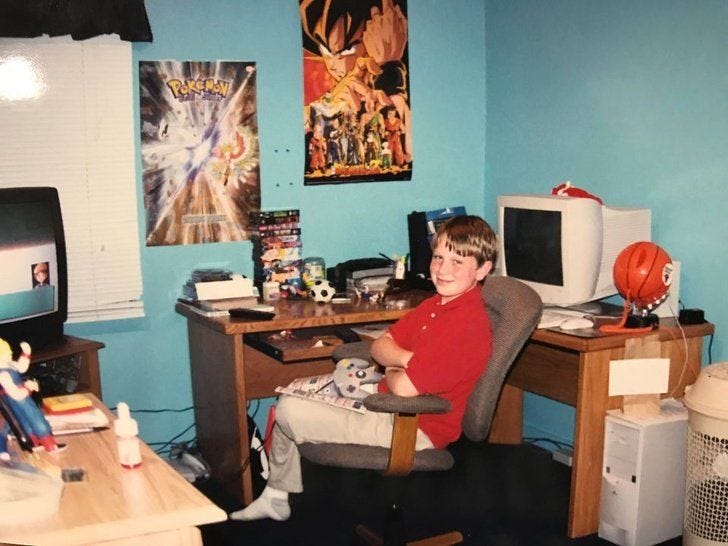
It’s been six months since I wrote my last Substack. And whilst everybody does indeed now have a Substack, hopefully there’s still space for me. The theme of this post is silence, and just how effective it can be as a marketing tool.
During those six months, I have written, rewritten, deleted, and started again numerous pieces, including the infamous “we didn’t grow up wanting to be content creators” that I could never break. I wouldn’t classify it as writer’s block; it was more that I was caught in the act of doing, and writing felt almost like a stop.
Like any good artist, you can’t just churn out stuff constantly. You need to live, lose yourself, and rediscover who you are before you can release something.
Yet the hamster wheel we find ourselves in for brands and businesses alike has no time for that. You’re not meant to inspire; you’re meant to be a constant omnipresence.
That stream of consciousness doesn’t create desire, though. After a first date, you don’t then send selfies to the person every day with a cryptic DM.
Silence builds desire. It builds obsession. It allows you to live rent-free in people’s brains, not exist fleetingly in their surface consciousness.
And that is the topic of this six-months-in-the-making post (that I wrote in a morning). I hope you enjoy.
Everywhere you look, culture is being spoon-fed to us. Campaigns roll out as “making-of” films before the thing itself exists. Founders narrate their mornings as if breakfast and skincare were a strategy (or something anybody actually cared about). We’re drowning in content, context, captions, and earnest over-explanation. Somewhere in the rush to be seen, the thing that made us look in the first place slipped away - mystery died, and with it the desire that once pulled us toward art + commerce.
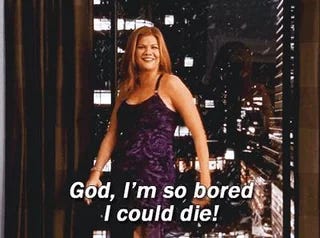
Think about how we used to fall in love with things. For many of us, the 90s were a training ground for obsession. Bedroom walls were alive - Britney Spears posters curling at the edges, ticket stubs fading, a lava lamp that never worked or solidified too soon. None of it matched, none of it was meant for an audience. It was private meaning in public view - a collage of becoming that didn’t need anything else.
That mess taught us how to want, how to sit with something before we understood it.
We need that again - space for desire and obsession, room to be weird, specific, and silent.
The working openly conundrum
“Day 1 of building brand X” has become the de facto way to become a LinkedIn influencer and launch a social-first brand. It’s simple: feed the algorithm and it serves you. And surely, if you have a bunch of followers personally, you can convert your brand more easily?
The jury’s out. What I’ve found most interesting is that this trend seems to focus predominantly on supplements and skincare. Now, I spend a fortune on wellness each year. The thing I love about beauty and science is how you can command a premium by implying the science without overselling it. But do I really want to watch you fuck up your packaging (again) - with *my* hard-earned cash - while you’re off to Dubai for another “strategy week”? Why not spend your business money hiring somebody who actually knows what they’re doing? Especially when it comes to healthcare (and my skin) - that is non-negotiable. Yay for entrepreneurship, but we seriously need some adults in the room to convey the value of the product.
Building openly might help your brand cut through, but there is a limit on longevity. Making continuous mistakes (and sharing earnestly) makes you look incompetent rather than brave. And that is especially corrosive to brand value for things I put on and in my body.
The build-up matters too much (and is too lucrative)
There is this insatiable desire to build momentum through a well-crafted buildup months before even announcing the thing. It’s simply not enough to launch something anymore - you need to feel the thing before you see the thing.
And I hate it. The same influencers wheeled out to the same venues. The same press pool waxing lyrical about the new thing. The same PR agencies looking smug, all convincing themselves that this is the best thing since the last thing.
At the core is this sort of corrupt-cum-moral founder dilemma. It’s not good enough to just be a founder anymore - you must be the face of the brand, both a brilliant genius and a clear communicator. Because guess what, it cuts through.
So now we have the founder story, the behind-the-scenes, the rollout. A lucrative ecosystem built around noise, not the actual thing.
The art of discovering something - and realising you like it - has been forgotten in the endless pursuit of contrived rollout plans. It makes everything feel so flash-in-the-pan, so hard to feel anything for, because you’re sold the feeling on demand rather than afforded the responsibility of learning about it yourself. The teaser is longer than the film. The reveal spoiled by the rollout.
An abundance of clarity
Todays marketers worship clarity. Clarity is useful in a meeting but absolutely deadening in the wild.
When the product finally launches, we learn about it through a series of over-explained monologues and poorly AI-written product landing pages. They fall into consciousness, never to be thought about again.
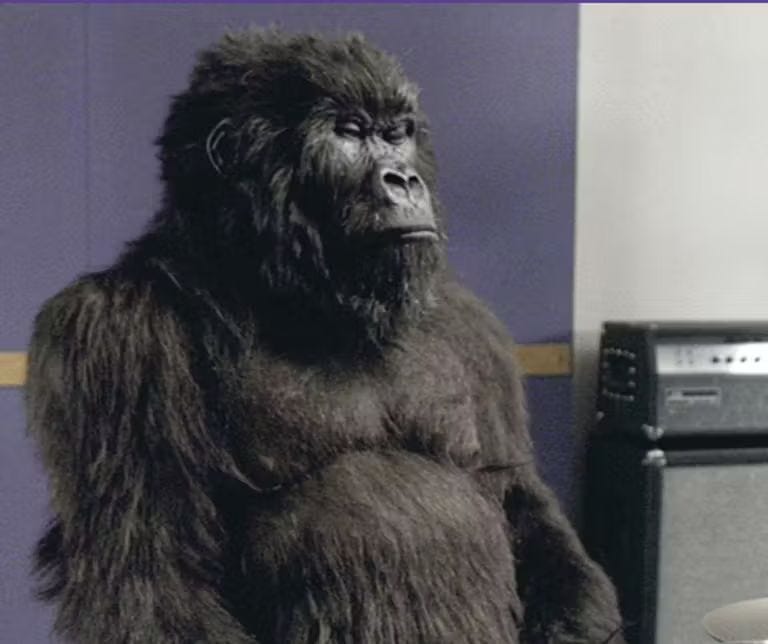
The campaigns we remember didn’t lead with explanation; they were art forms themselves. Cadbury’s gorilla at the drum kit. Sony Bravia’s exploding paint across a Glasgow estate. Guinness’ surfer chased by white horses. They asked you to feel first and rationalise later, leaving room for interpretation, for myth, for personal meaning.
Mystery is the gap between what is shown and what is said - a refusal to hand everything over at once and a trust in the audience to think about something more than what’s being said.
Can you name a campaign that made you stop and think, that ran for more than a week, that genuinely caused you to feel something? We’re trapped in mid-tier campaigns (generous) being rolled out every week instead of somebody, somewhere, taking a risk, betting a budget, and going for it for a quarter. Remember how long those ads ran for?
The worst thing we can do is be risk-averse in society, constantly just doing rather than thinking and disrupting.
Bend things to you, don’t create for what already exists.
Oddness has always been a creative advantage. Look at the people who bent culture to their will: Vivienne Westwood’s pirate collection, Leigh Bowery’s living sculptures, Cindy Sherman’s self-portraits that made the viewer complicit, Takashi Murakami’s collision of fine art and anime, Rei Kawakubo’s lumps and bumps for Comme des Garçons, Grace Jones in a pyramid hat snarling into a mic.
None of them were chasing broad appeal. They made work so specific, so rooted in their own language, that the market eventually bent towards them. They cared so much about something that ultimately, others followed.
Being called “odd” is rarely an insult from anyone whose opinion matters. It usually comes from people terrified of standing out - people who wait for the trend cycle to give them permission, who confuse fitting in with belonging, who evaporate from memory the second you leave the room.
Just look at Trader Joe’s bags and people suckered into buying the excessive skincare advent calendars that “sell out” in September - do you actually want to hang out with anybody who buys these things? 9/10 these are the perpetually angered crowd - the same ones crowing about the environment, but happy enough to order the Liberty advent calendar with single-use plastic behind every door for 25 glorious days.
Worse yet, do you want to be sold anything by these people? These are often the nodding dogs who make the marketing we are spoon-fed every day - too scared to offend, too brainwashed to create. Everybody knows a 21-year-old who seems to be running social media at some fairly major brand.
The only way to shape culture is to define it, not be defined by it. And dare I say, just because you spend a lot of time on it, doesn’t necessarily make you good at it.
The hard-sell chokehold
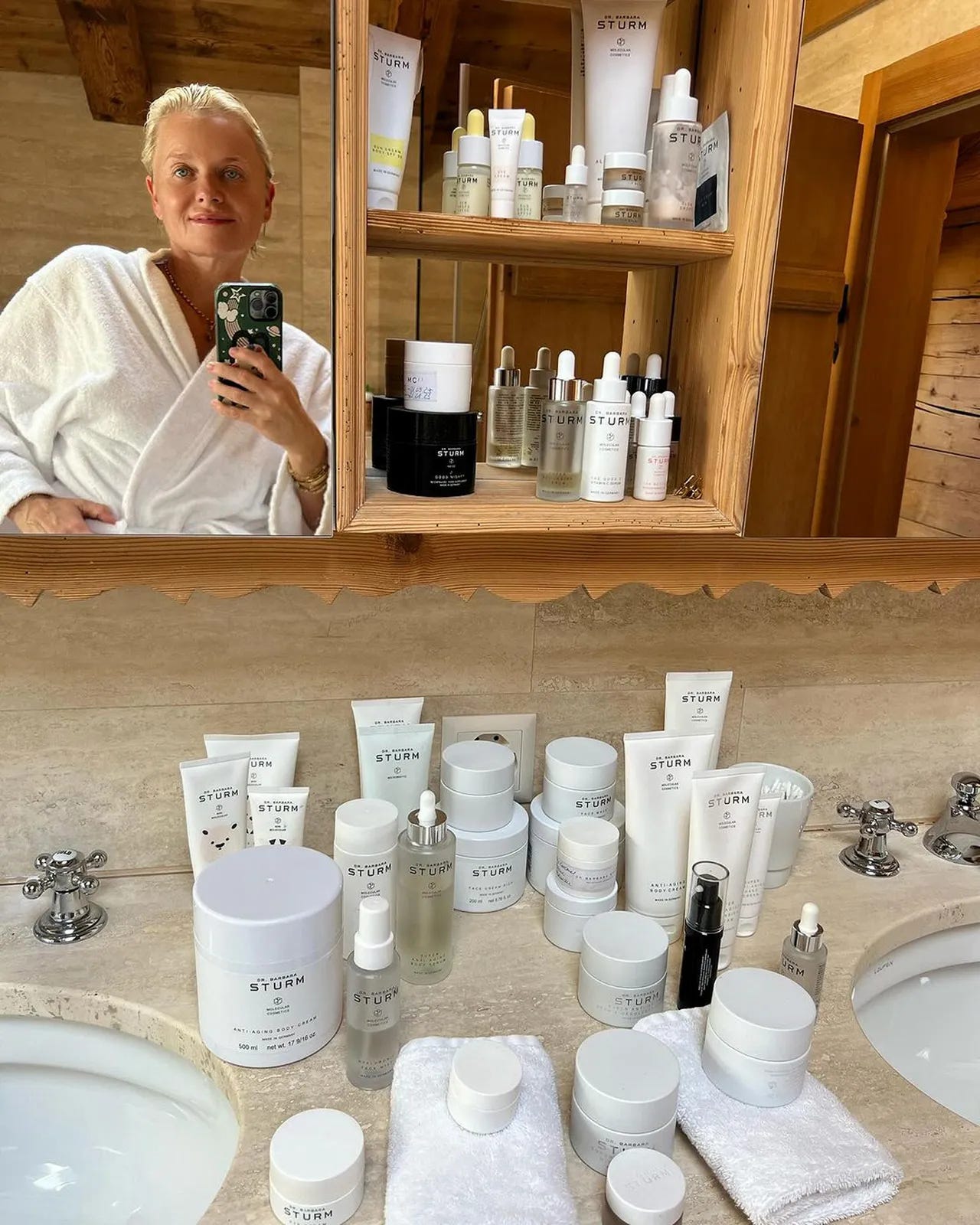
Most of the brands I use every day, I don’t follow on social media. I dislike their selling strategies but like their products. Their social marketing, like everybody else’s, is their founder in various degrees of undress applying the product and labouring through the individual ingredients that made them look like this. Many lesser brands see this and create a cookie-cutter approach.
The difference is that brands with good products can do this because their repeat rates justify a lack of social engagement. And the copycats? They end up in an expensive hamster wheel, chasing new customers because no one ever came back.
But when did you last see these companies invest in brand marketing? It’s all in quick-fire befores and afters and seasonal marketing extravagance - never once have I seen Dr Barbara Sturm and felt something.
Again, the dichotomy between pushing a founder as marketing and creating something of real value almost always resolves in favour of the former - satiating the often narcissistic tendencies of the founder versus cash flow. Steve Jobs didn’t get on a reel to sell the CPU of a Mac; Apple created art to fuel obsession.
If I’m subscribed, I want to be fed and trusted - I want longform stories that build worlds and tease products and desire. I want somebody, somewhere, to have an opinion that’s worth reading. One that’s worth challenging and dissecting with a friend. I don’t want my shampoo to DM me.
Why do we keep going wrong?
Through social media, we now know exactly how the other half live. The cars, the kitchens, the handbags, the houses. It’s only human to want what we see. Envy used to be local; now it’s algorithmic.
Somewhere along the way, wanting became a business model. It’s not enough to be a millionaire. It’s not enough for your company to be doing ten million in revenue. The message we’ve absorbed is that you must always want more, that success only counts if it keeps compounding.
So we feed the machine. We buy the social ads. We optimise, retarget, convert. We build the funnel, tell the story, push the same product through slightly different creative. The numbers climb, the dashboard glows, the dopamine hits.
Then you turn the ads off, and the illusion breaks. The sales drop. The graph dips. The conversation stops. Because we didn’t build desire, we built dependency. And dependency doesn’t scale.
We keep going wrong because we’ve mistaken noise for growth. Because we’ve confused visibility with value. Because we’re too busy performing success to build something that might actually last.
Anybody who has worked with me will have heard me mention the law of diminishing returns - the more you churn out, the lower your reward. Greatness doesn’t come from posting daily - it comes from breadcrumbing, from teasing, from giving space for ideas to form before letting them in just a little bit more. It comes from believing your audience has a brain, and trusting them to do something with it.
Everybody needs to disappear for a bit.
We’ve mistaken constant visibility for meaning. Every thought broadcast, every project teased before it’s even real, every daily recap that leaves nothing to the imagination. We’re so busy proving we exist that we’ve forgotten how to live and do and make things that matter.
The best ideas don’t come to you when ChatGPT is writing your LinkedIn post. They happen in the gaps, the pauses. When you’re walking home and it starts to rain. When you’re bored on a train with no signal.
You have to be liked and loathed, often in equal measure. That’s how you know you’ve made someone feel something. You’ve taken up headspace. You’ve lived rent-free in their mind long enough for them to care.
But that feeling doesn’t come from constant output. It comes from absence. From silence. From mystery. From the time spent away that makes the return feel worth it. And then from creating a greatness so specific, you can’t ignore it.
So take time to feel inspired; you don’t need consistency in your communication to be relevant. You certainly don’t need to broadcast the minutiae of your life. You need depth, feeling.
Brilliant ideas will cut through the noise. Controversy will breed conversation.